- Aug 30
What Makes a Group Trip Feel Curated Instead of Crowded
- Arabia Francis
- Travel Planning
- 0 comments
There is a version of group travel most women have already survived. Forty people. A guide holding a numbered paddle. A restaurant with a back room built specifically to absorb a group your size. You come home with a camera roll and almost no memory of a single real conversation.
That is what crowded feels like. It is also why so many women tell me they would rather go alone than go with a group at all.
Curated is a different thing entirely. It is not a nicer bus or a smaller crowd doing the same thing. It is a completely different set of decisions, most of them made months before anyone packs a bag. I want to walk you through how I actually plan and host, because the process explains the feeling better than any adjective I could put on a landing page.
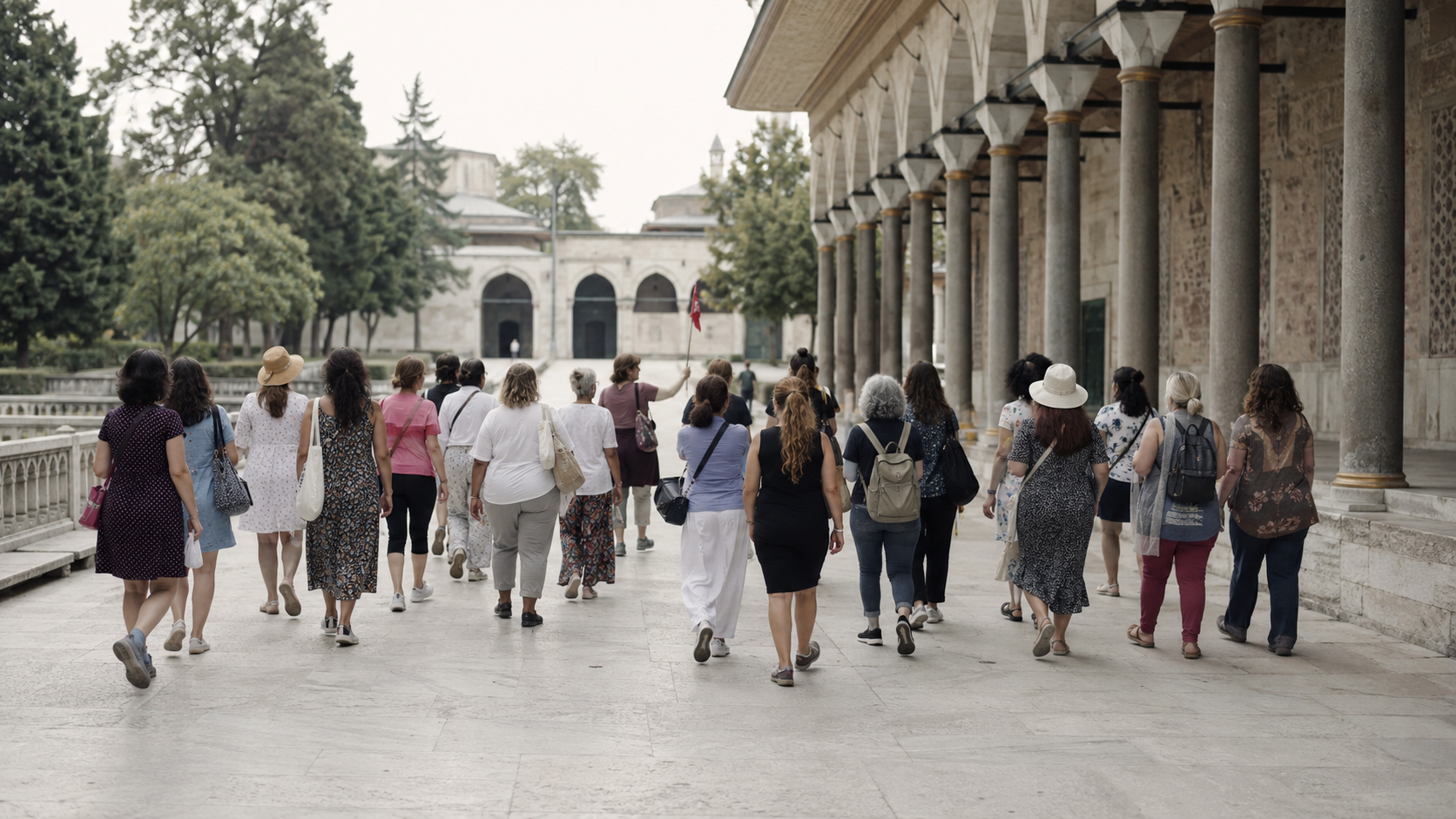
Crowded is not about the number of people. It is about the number of decisions.
A trip feels crowded when every choice has already been made for you and none of them were made with you in mind. The 6:15 a.m. lobby call. The 90 minutes at a site that deserved three hours. The group dinner where you are seated with whoever happened to be behind you in line.
You are not a person on that trip. You are a headcount that has to be moved from point to point on schedule.
Curated flips that. Every decision starts with a question about the woman actually taking the trip. What does she want to feel by Wednesday? What does she need in the morning before she can be social? What is the one thing she would regret not seeing? When you plan from those answers, the itinerary comes out looking completely different.
How I plan a trip before anyone sees an itinerary
Here is the actual order of operations. It is not the order most people expect.
I set the group cap before I look at a single hotel
Group size is the first decision, not the last, because it constrains everything after it. A cap of eight to twelve women means I can book the restaurant with nine tables instead of the one with ninety. It means the guide can actually answer your specific question instead of projecting to the back row. It means we can change plans on Thursday because the group wants to, and it takes one conversation instead of a logistics rescue mission.
Most operators pick the destination, build the itinerary, then fill as many seats as the bus holds. I do it backwards on purpose. The cap is the design constraint that makes everything else possible.
I build each day around one anchor, not five
A packed itinerary looks impressive in a PDF and feels terrible on day four. So, I give each day one anchor: the thing that is worth planning the rest of the day around. Everything else is optional and clearly labeled that way.
What an anchor looks like in practice
In Portugal, an anchor might be a morning in a family kitchen learning a dish from the woman who has been making it for forty years, then eating it at her table. That is three hours. It is also the whole day, emotionally. You do not need to also see four churches and a museum afterward. You need lunch to end slowly and an afternoon with nothing on it.
One anchor a day is not less of a trip. It is more of a trip, because you are actually present for it.

I book the small rooms on purpose
Venue capacity is a design, not a budget decision. I look for the restaurant that seats forty total, the boutique property with eighteen rooms, the tasting room that closes to the public for two hours. Places that cannot physically hold a crowd will never make you feel like one.
This sometimes costs more per person. I would rather charge honestly for a room that holds us than save money on a hall that swallows us.
I protect the white space, and I do not fill it later
Open time on the calendar is the first thing that gets eaten when someone suggests one more stop. So, I write it into the itinerary as an actual block with an actual name. Free afternoon. Not tentative. Not a placeholder.
The white space is where the trip becomes yours. It is the nap, the second coffee, the wander with no destination, the conversation that keeps going because nobody has to be anywhere. Women consistently tell me those hours were their favorite part, and they only exist because I refused to trade them away for one more activity.

What hosting actually looks like once we are on the ground
Planning is half of it. The other half is what I do while you are there.
I handle the friction, so you do not have to
The reservation that got moved. The driver who is running late. The woman whose baggage did not make the connection. You will usually not know these things happened. That is the job. My goal is that the only decisions you make all week are what to order and whether you want the afternoon off.
I read the room and adjust
By day two I know who needs quiet in the morning, who wants to be in the front seat asking questions, who is traveling through something and did not say so out loud. A group of ten lets me notice. A group of forty does not.
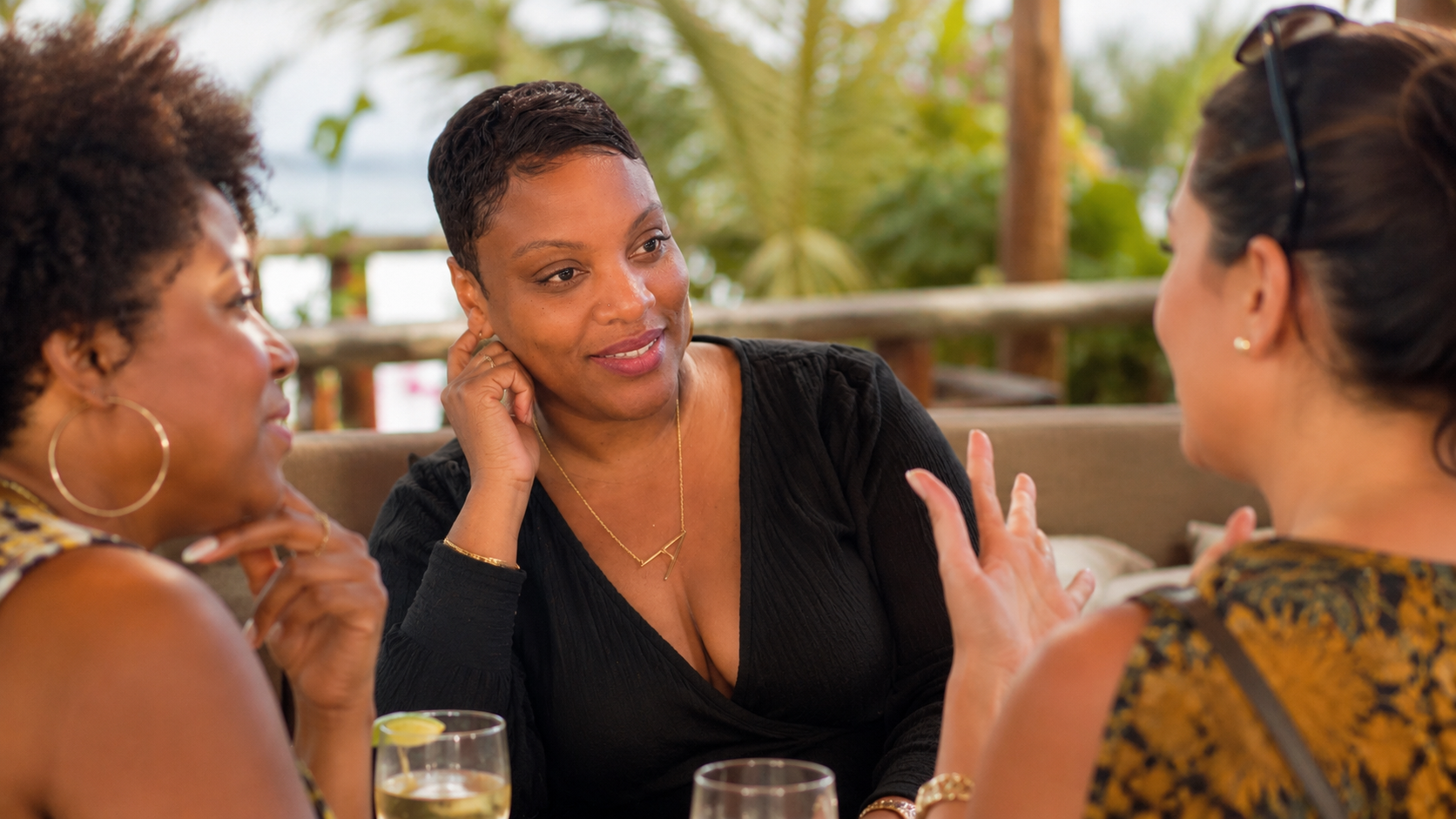
I make sure nobody eats alone unless they want to
Most of the women who travel with me come solo. Part of hosting is making sure solo never turns into isolated, and also never turns into forced togetherness. There is a real difference between an invitation and an obligation, and I keep an eye on both.
Why this matters more when you are traveling without a plus one
If you have a partner or a best friend with you, a crowded trip is survivable. You have your person. You debrief at night, you skip what you want to skip, you have someone to sit with.
Traveling solo into a group changes the math. The group is the experience. Who is in it, how many of them there are, and whether anyone is paying attention to how you are doing determine whether you come home restored or come home relieved it is over.
That is the whole reason I cap my groups where I do. Not for exclusivity. Because ten women can actually become something to each other in eight days and forty cannot.
How to spot the difference before you book
You do not have to take anyone's word for it, including mine. Ask these four questions of any trip you are considering.
What is the maximum group size, and is it a cap or a goal? A real cap is a number they will turn away money to protect.
How many things are scheduled on an average day? If you count more than two hard commitments, expect to feel rushed.
Who is hosting, and are they physically there the whole time? Some trips hand you off to a local operator on day one.
How much unscheduled time is written into the itinerary? If the answer is none, the answer is crowded.
Those four answers tell you almost everything. A trip designed around a headcount cannot hide from them.
The short version
Curated is not a word I put on a page. It is a group cap set before the hotel search. One anchor a day instead of five. Rooms too small to hold a crowd. White space nobody is allowed to fill. And a host who is in it with you, noticing.
That is the difference. It is all process, and the process is the reason the trip feels the way it does.
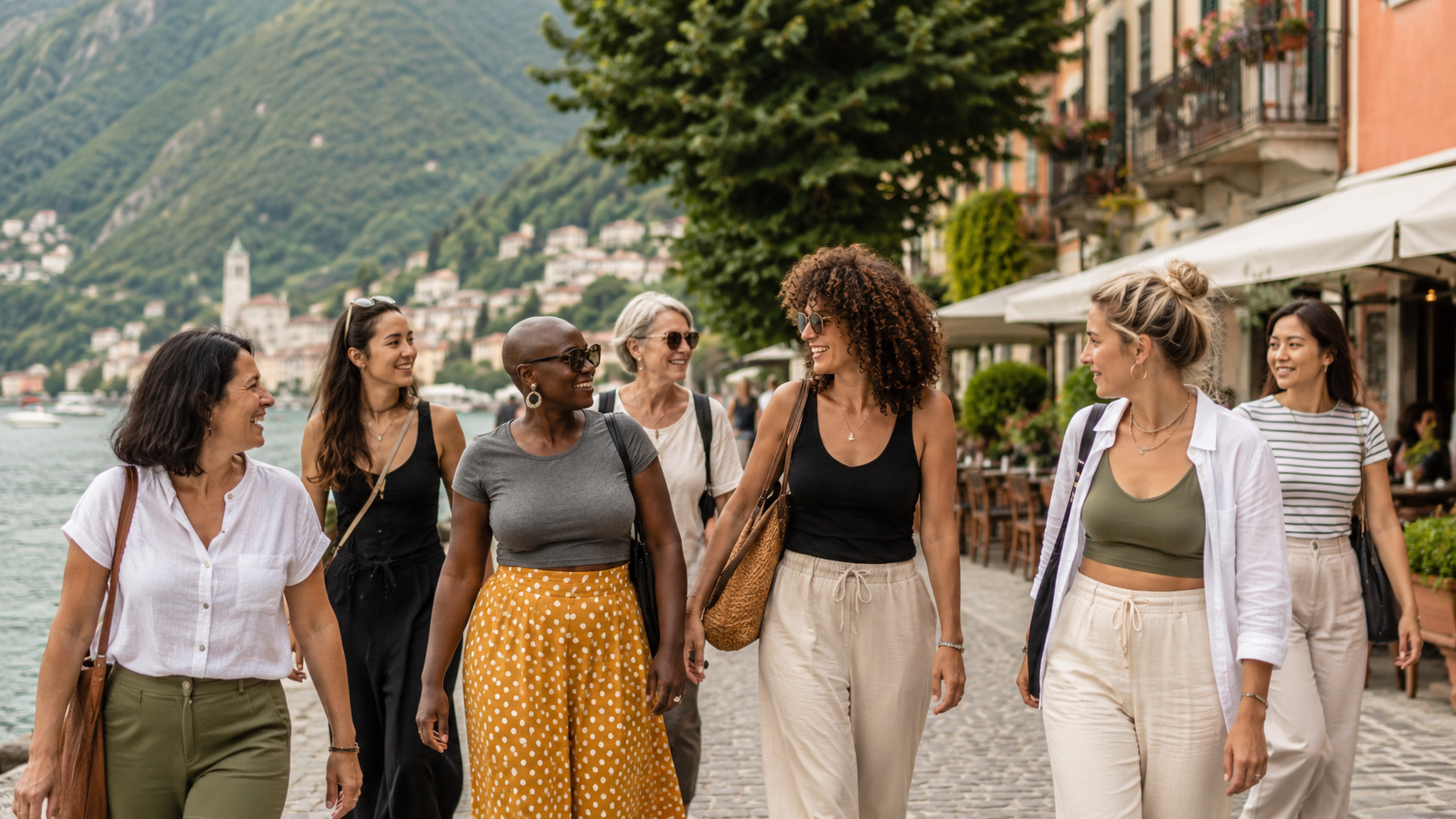
Want to see what this looks like on an actual calendar?
Everything above is how I plan, so the honest next step is to go look at what it produced.
The hosted trips page has the current small group trips for women, with the group cap, the destination, and the dates. If one of them is the trip you have been waiting for, that page will tell you fast. If the timing is not right yet, the trip waitlist is where you hear about new dates first, plus founding member pricing and early input on the itinerary.